

Direct to Film vs. Direct to Garment: Pros and Cons
Last Updated: 09/25/2025
Talk to our team today! (323) 261-8700
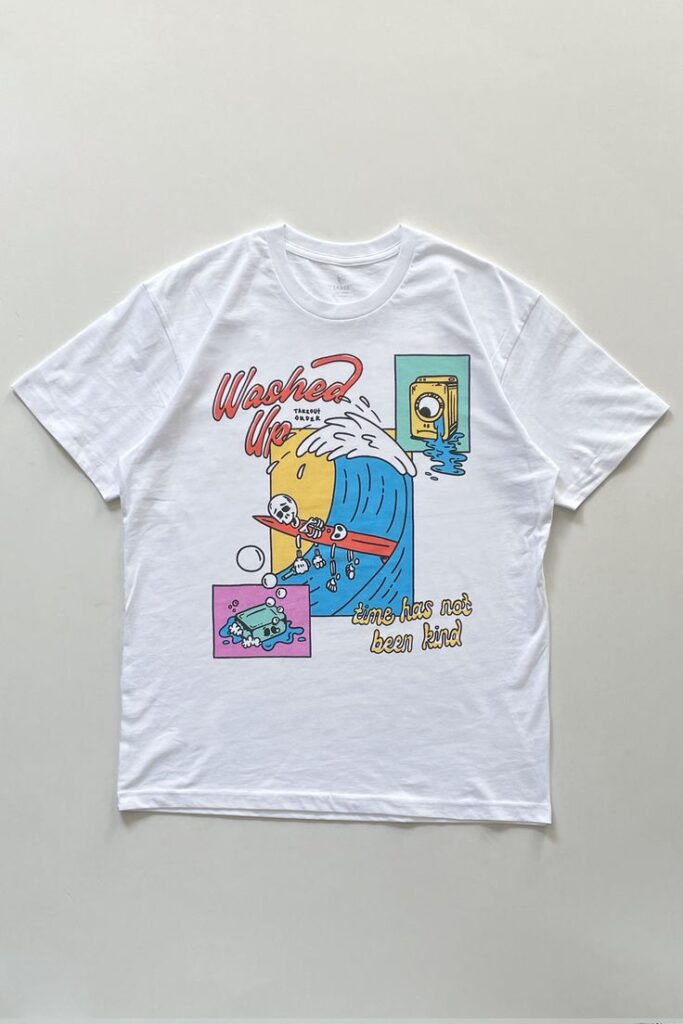
The world of custom branded apparel printing has seen a surge in popularity for both Direct to Garment (DTG) and Direct to Film (DTF) printing methods. These two techniques offer unique advantages and challenges, making them suitable for different business needs. While we’ll dive into the details of each here, you can also check out a comprehensive guide to t-shirt printing methods for a broader look at all available options.
What is Direct to Garment (DTG) Printing?
Direct to Garment (DTG) printing is a process that prints digital designs directly onto fabric. It involves using specialized inkjet technology to print high-quality images on custom t-shirts, hoodies, and other garments. Here's a quick overview of the DTG printing process:
- 1. Pre-treatment: The garment is coated with a pre-treatment liquid to help the ink bond with the fabric.
- 2. Printing: The pre-treated garment is placed on the DTG printer platen, and the design is printed directly onto it.
- 3. Curing: After printing, the garment is heat-pressed to cure the ink and ensure durability.
Pros of DTG Printing
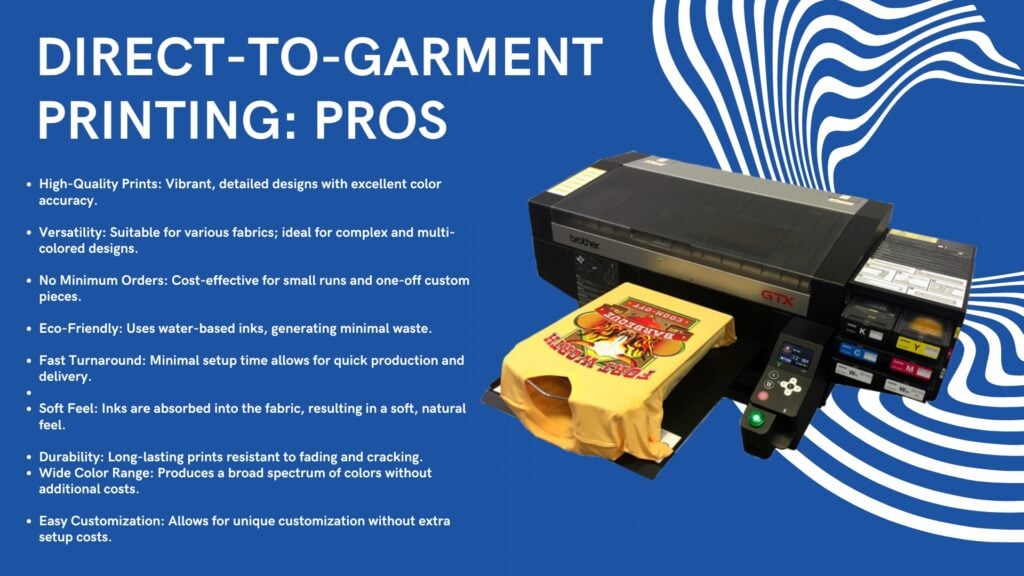
- 1. High-Quality Prints: DTG produces vibrant and detailed prints directly onto the fabric.
- 2. No Transfer Paper Needed: Eliminates the need for transfer paper, saving time and material costs.
- 3. Durability: The ink bonds well with the fabric, resulting in a smooth, durable finish that lasts through many washes.
- 4. Fast Bulk Printing: Advanced direct to garment printers can produce bulk orders quickly, making it ideal for large runs. If you're looking for DTG printing Los Angeles services, DTG is especially appealing because of its fast turnaround and consistent print quality for local and national businesses.
Cons of DTG Printing
- 1. Pre-treatment Required: You must pre-treat garments, which adds an extra step to the process.
- 2. Limited Substrates: Suitable mainly for flat garments like custom t-shirts and hoodies; not ideal for items like mugs or caps.
What is Direct to Film (DTF) Printing?
Direct to Film (DTF) printing prints designs onto a special film, then transfers them to the garment using adhesive powder and heat. The DTF printing process includes the following steps:
- 1. Printing on Film: The design is printed onto a special film.
- 2. Adhesive Application: The printed film is coated with adhesive powder.
- 3. Heat Transfer: The design is transferred onto the garment using a heat press.
- 4. Curing: The garment is heat-pressed again to ensure the design adheres well.
Pros of DTF Printing
- 1. No Pre-treatment Needed: Skips the pre-treatment step, saving time and costs.
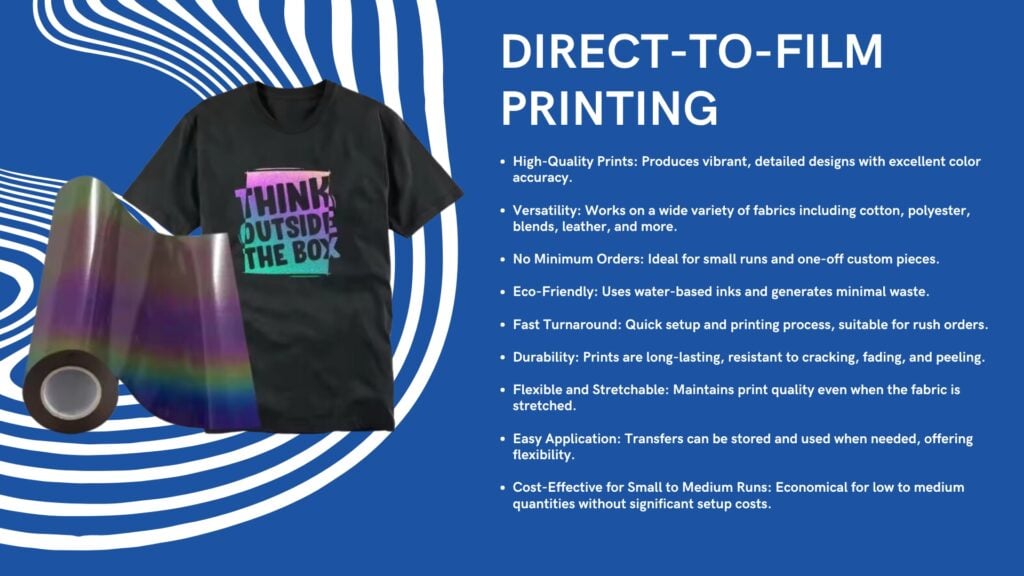
- 2. Versatility: Can transfer designs onto a variety of substrates, including mugs, plates, and caps.
- 3. Stockpile Designs: Allows businesses to stockpile pre-printed designs on film, ready for transfer.
Cons of DTF Printing
- 1. Special Materials Required: Needs special film and adhesive powder, which can increase costs.
- 2. More Labor-Intensive: Involves additional steps compared to DTG, making it more labor-intensive.
- 3. Waste Generation: The film paper used is not reusable, leading to more waste.
Cost and Profitability Comparison
Both DTG and DTF printing methods can be profitable, but they come with different startup and operational costs.
DTG Printing Costs
- • Startup Costs: Direct to garment printers range from $13,000 to $20,000+.
- • Per Print Costs: Average $0.50 to $1 for light garments and $1.25 to $3.50 for dark garments.
- • Pre-treatment: Adds about $0.50 per t-shirt.
- • Blank Garments: Wholesale prices range from $3 to $4 each.
DTF Printing Costs
- • Startup Costs: DTF printers cost between $2,000 and $5,000.
- • Per Print Costs: Similar to DTG, with the addition of film paper costing $1.50 per print.
- • Adhesive Powder: Costs about $0.50 to $0.60 per print.
- • Blank Garments: Same as DTG, around $3 to $4 each.
Conclusion: Which Method is Best for Your Business?
Deciding between DTG and DTF printing depends on your business needs and goals. DTG printing delivers high-quality, durable prints on flat garments and works well for bulk orders. On the other hand, DTF printing offers versatility and the ability to print on various substrates, making it a great choice for businesses looking to expand their product range.
Both methods are profitable, with DTG offering a slight edge in print quality and DTF providing more flexibility. For businesses that want the best of both worlds, Ricoma's printers offer both DTG and DTF functions, allowing you to switch between methods as needed.
Final Thoughts
Understanding the differences between DTG and DTF printing can help you make an informed decision for your custom branded apparel business. Whether you prioritize print quality, versatility, or cost-efficiency, both methods have their unique advantages. Consider your specific needs, budget, and business goals to choose the best printing method for you.

Let’s Get Started on your First Order

subcategories


Popular Products

Southern Tide Mini Skipjack Hat
Adidas Adjustable Washed Slouch Cap
Swannies - Delta Cap
Imperial - The Original Small Fit Performance Cap
Oakley - Pro-Formance Cap New
Sportsman - Five-Panel Rope Heritage Fit Cap
OTTO - 5 Panel Mid Profile Baseball Cap
AS Colour - STELLA LONGSLEEVE
AS Colour - Mens Raglan Tee
AS Colour - Mens State Tee
AS Colour - Youth L/S Tee
AS Colour - Mens Classic Pocket L/S Tee
AS Colour - Mens Heavy Tee
Los Angeles Apparel - Garment Dye Micro Crop Tee
Helly Hansen Mens Engram Jacket
Helly Hansen Womens Salt Original Jacket
Helly Hansen Womens Imperial Pile Jacket
Helly Hansen Mens Daybreaker Block Microfleece Jacket
Helly Hansen Womens Aspire Puffy Parka
Helly Hansen Womens Vancouver Rain Jacket
Helly Hansen Mens Verglas Icefall Down Jacket
Los Angeles Apparel - 16oz. Plush Fleece PO Hoodie
Los Angeles Apparel - Baby Rib Long Sleeve Hoodie
Los Angeles Apparel - 12oz Fleece Wide Hoodie
Los Angeles Apparel - 12OZ TRIBLEND FLEECE HOODIE
Under Armour Womens Drive Pro Hybrid Hoodie
Under Armour Womens Breezy Hoodie
Southern Tide Womens Linley Brrr-illiant Performance Hoodie
AS Colour - Carrie Tote
Los Angeles Apparel - Bull Denim Shopping Bag
Peter Millar Pursuit Tote
Johnnie-O Dyed Canvas Tote Bag
Johnnie-O Nylon Packable Tote
Los Angeles Apparel - Oversize Bull Denim Bag
Patagonia Terravia Tote Pack
Everybody World - Adjustable Apron
Artisan Collection by Reprime - Annex Oxford Apron with Pocket
Artisan Collection by Reprime - Recycled Bib Apron
Artisan Collection by Reprime - Artisans Choice Canvas Apron
Artisan Collection by Reprime - Four-Pocket Jeans Stitch Denim Bib Apron
Artisan Collection by Reprime - Cross Back Barista Apron with Pocket
Artisan Collection by Reprime - Calibre Cotton Canvas Bib Apron
resources
get a quote!
Fill out this form to help us understand your needs and respond accurately.

4
47 Brand
A
Adams Headwear
A
Adidas
A
Allmade
A
American Apparel
A
ANETIK
A
Artisan Collection by Reprime
A
AS Colour
A
Atlantis Headwear
A
Augusta Sportswear
A
Authentic Pigment
B
Badger
B
BAGedge
B
Bayside
B
Beimar
B
Bella + Canvas
B
Bogg
B
Boxercraft
C
Carhartt
C
Carmel Towel Company
C
Champion
C
Colortone
C
CORE365
C
Columbia
C
Comfort Colors
C
Cotton Heritage
D
DTLA Print
D
Dyenomite
E
Econscious
E
Everybody World
E
Everywhere Apparel
F
Flexfit
F
Fruit of the Loom
G
G Fore
G
Galvin Green
G
Gildan
H
Hanes
H
Helly Hansen
I
Independent Trading Co.
I
Imperial
I
Infinity Her
J
Jaanuu
J
Jerzees
J
Johnnie-O
J
Just Hoods By AWDis
K
Kati
K
Kishigo
K
Knack
L
Lane Seven
L
Legacy
L
Liberty Bags
L
Linksoul
L
Los Angeles Apparel
M
M&O
M
Marine Layer
M
Mega Cap
N
New Era
N
Next Level
N
Nike
N
North Face
O
Oakley
O
OGIO
O
OGIO Endurance
O
Onna
O
OTTO
O
Original Favorites
P
Paragon
P
Patagonia
P
Peter Millar
P
Port & Company
P
Port Authority
Q
Q-Tees