

Environmentally Friendly Screen Printing Inks
Last Updated: 09/16/2026
Talk to our team today! (323) 261-8700
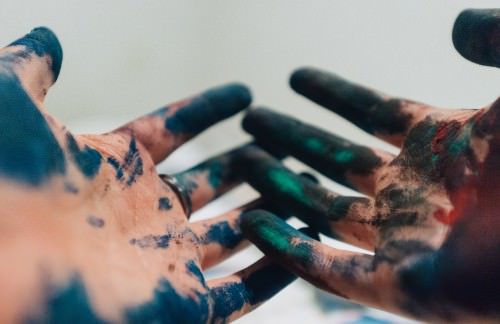
Your custom t-shirts say more than that you like Justin Bieber. Each of your tees literally carries your environmental impact in its ink.
Traditionally, choosing the right ink for your tee has been a combination of quality, ease of use, and price. However, for designers and consumers today, the environmental impact of our choices matter more than ever before. If you’re looking for eco-friendly screen printing that doesn’t affect quality or price, what are your options?
Screen printing companies large and small are jostling for pole position in the “green” and “eco-friendly” ink markets. However, because these claims are largely unregulated, just because a product or a company claims to be “green” or “eco-friendly” doesn’t mean that it actually is.
Knowing this, it’s important for us not just to claim that one kind of screen printing ink has a lower environmental footprint than another. We need to break down, systematically, the many factors that go into making a responsible choice.
Let’s start by talking about the ink that remains the industry standard today: plastisol ink.
The Environmental Impact of Plastisol Ink

Plastisol ink, which is a plastic-based ink often used for mass-produced apparel, is still the screen printing industry standard due to its ease of use. To understand the environmental impact of plastisol ink, let’s look at its basic chemical components.
Plastisol’s chemical base contains polyvinyl chloride (PVC), a mix of plasticizer liquid and PVC resin, both harmful chemicals. PVC is valued for its ease of use and versatility in mass production. However, making it results in the release of the chemicals polychlorinated biphenyl (or PCB) and dioxin. Both of these chemicals are, at the very least, highly toxic, and, in some cases, carcinogenic according to the World Health Organization.
In addition to the toxicity of its chemical base, the chemicals used in the manufacturing and maintenance of plastisol ink have potentially detrimental effects on both small-scale and wide scale environmental health. Specifically, most plastisols contain something called phthalates.
Manufacturers add phthalates to plastisol inks to turn a naturally hard plastic into a soft, malleable one. However, studies show that, like PCB and dioxin, phthalates can be carcinogenic. In addition, there has been a lot of research on the damage phthalates can do to the reproductive system.
Phthalates potentially harm human health and release into our ecosystem during the printing and curing process, causing cumulative damage to the environment. Even after production, plastisol clothing emits toxins under sunlight or high heat.
Beyond plastisol’s toxins, cleanup chemicals add further risks if not disposed properly.
Essentially, plastiol screen printing ink impacts the environment in every stage of its life cycle, from making it, to using it, to laundering it. But is the alternative to plastisol ink, water based ink, any better for us and our environment? Beyond its environmental benefits, water based ink in screen printing also delivers superior softness and durability compared to plastisol.
The Environmental Impact of Water Based Ink

Water based ink, which is made by suspending a 100% biodegradable pigment into a water base, is gaining popularity within the screen printing industry due to its combination of quality, affordability, and eco-friendliness.
As a compound, water-based ink is much more gentle on the environment than plastisol ink. It simply doesn’t contain any of the toxic chemicals of its plastisol counterparts (no PVC, no phthalates). Instead it’s comprised of naturally occurring substances.
Because of this, water based ink is much less risky for printers, consumers, and the environment. In addition, because it’s water soluble, you can clean it up without using specialized chemicals. This keeps potentially harmful substances out of our waste and water supply.
Remember that although the components of water-based ink are less harmful to the environment than plastisol inks, its ultimate eco-footprint depends just as much on how you handle, store, and clean it as on its lower toxicity. This focus on sustainability isn’t limited to apparel. Many brands are also turning to eco-friendly personalized throws and blankets made with organic cotton or recycled polyester, offering comfort without compromising environmental responsibility
Water based inks are only eco-friendly when you use and dispose of them in a responsible manner. To put it simply, you can’t go halfway, you have to finish the job. Even the best, most gentle industrial inks and cleaning products are still chemicals. In screen printing, most long-term ecological harm comes from cleanup waste, not the process or chemicals. This is why it’s so important to learn how to safely dispose of screen printing ink.
Conclusion

Consumers now know the effects that screen printing chemicals have on the environment and their own health. For screen printers, this means we must consider mother nature in addition to quality and price. Assess all operations, products, equipment, and waste, for eco-friendly improvements.
This is printing. It all starts with the ink. Despite its convenience and ease of use, the persistence of plastisol inks in this business is irresponsible to our climate and to ourselves. When used properly, water-based inks deliver quality while supporting environmental sustainability.
Beyond inks themselves, the choice of printing process, such as using screen printed transfers instead of direct screen printing, also affects cost, setup, and production efficiency.

Let’s Get Started on your First Order

subcategories


Popular Products

Southern Tide Mini Skipjack Hat
Adidas Adjustable Washed Slouch Cap
Swannies - Delta Cap
Imperial - The Original Small Fit Performance Cap
Oakley - Pro-Formance Cap New
Sportsman - Five-Panel Rope Heritage Fit Cap
OTTO - 5 Panel Mid Profile Baseball Cap
AS Colour - Youth L/S Tee
AS Colour - Mens Classic Pocket L/S Tee
AS Colour - Mens Heavy Tee
AS Colour - STELLA LONGSLEEVE
AS Colour - Mens Raglan Tee
AS Colour - Mens State Tee
Los Angeles Apparel - 18/1 S/S Oversized Mock
Helly Hansen Mens Engram Jacket
Helly Hansen Womens Salt Original Jacket
Helly Hansen Womens Imperial Pile Jacket
Helly Hansen Mens Daybreaker Block Microfleece Jacket
Helly Hansen Womens Aspire Puffy Parka
Helly Hansen Womens Vancouver Rain Jacket
Helly Hansen Mens Verglas Icefall Down Jacket
Los Angeles Apparel - 16oz. Plush Fleece PO Hoodie
Los Angeles Apparel - Baby Rib Long Sleeve Hoodie
Los Angeles Apparel - 12oz Fleece Wide Hoodie
Los Angeles Apparel - 12OZ TRIBLEND FLEECE HOODIE
Under Armour Womens Drive Pro Hybrid Hoodie
Under Armour Womens Breezy Hoodie
Southern Tide Womens Linley Brrr-illiant Performance Hoodie
AS Colour - Carrie Tote
Los Angeles Apparel - Bull Denim Shopping Bag
Peter Millar Pursuit Tote
Johnnie-O Dyed Canvas Tote Bag
Johnnie-O Nylon Packable Tote
Los Angeles Apparel - Oversize Bull Denim Bag
Patagonia Terravia Tote Pack
Everybody World - Adjustable Apron
Artisan Collection by Reprime - Annex Oxford Apron with Pocket
Artisan Collection by Reprime - Recycled Bib Apron
Artisan Collection by Reprime - Artisans Choice Canvas Apron
Artisan Collection by Reprime - Four-Pocket Jeans Stitch Denim Bib Apron
Artisan Collection by Reprime - Cross Back Barista Apron with Pocket
Artisan Collection by Reprime - Calibre Cotton Canvas Bib Apron
resources
get a quote!
Fill out this form to help us understand your needs and respond accurately.
4
47 Brand
A
Adams Headwear
A
Adidas
A
Allmade
A
American Apparel
A
ANETIK
A
Artisan Collection by Reprime
A
AS Colour
A
Atlantis Headwear
A
Augusta Sportswear
A
Authentic Pigment
B
Badger
B
BAGedge
B
Bayside
B
Beimar
B
Bella + Canvas
B
Bogg
B
Boxercraft
C
Carhartt
C
Carmel Towel Company
C
Champion
C
Colortone
C
CORE365
C
Columbia
C
Comfort Colors
C
Cotton Heritage
D
DTLA Print
D
Dyenomite
E
Econscious
E
Everybody World
E
Everywhere Apparel
F
Flexfit
F
Fruit of the Loom
G
G Fore
G
Galvin Green
G
Gildan
H
Hanes
H
Helly Hansen
I
Independent Trading Co.
I
Imperial
I
Infinity Her
J
Jaanuu
J
Jerzees
J
Johnnie-O
J
Just Hoods By AWDis
K
Kati
K
Kishigo
K
Knack
L
Lane Seven
L
Legacy
L
Liberty Bags
L
Linksoul
L
Los Angeles Apparel
M
M&O
M
Marine Layer
M
Mega Cap
N
New Era
N
Next Level
N
Nike
N
North Face
O
Oakley
O
OGIO
O
OGIO Endurance
O
Onna
O
OTTO
O
Original Favorites
P
Paragon
P
Patagonia
P
Peter Millar
P
Port & Company
P
Port Authority
Q
Q-Tees