

Different T-Shirt Printing Methods Explained: A Comprehensive Guide
Last Updated: 09/16/2026
Talk to our team today! (323) 261-8700
Introduction
When it comes to customizing t-shirts, there are several t-shirt printing methods to choose from. Each technique offers unique advantages and is suitable for different design needs and fabric types.
In this blog post, we’ll explore the various t-shirt printing methods, including screen printing, water-based printing, discharge printing, simulated process printing, direct-to-garment printing, and vinyl transfers.
Beyond t-shirts, there are also other textile printing methods such as block, roller, and burnout printing that are widely used in fashion and fabric design.
By the end of this guide, you’ll have a clearer understanding of which method is best for your t-shirt printing project.
Screen Printing
What is Screen Printing?
Screen printing is one of the most popular t-shirt printing methods, especially for large quantities. It involves creating a stencil (or screen) and using it to apply layers of ink on the printing surface.
How Does Screen Printing Work?
- 1. Creating the Screen: Each color in the design requires a separate screen. Technicians apply photosensitive material to the screen and place the design under it.
- 2. Exposing to Light: Light exposure hardens the emulsion on the screen, except where the design blocks it.
- 3. Washing the Screen: Washing away the unexposed areas leaves a stencil of the design.
- 4. Printing: Ink is pushed through the screen onto the custom t-shirt.
Pros and Cons of Screen Printing
Pros
- • Cost-effective for large quantities
- • Durable and long-lasting prints
- • Vibrant colors
Cons:
- • Expensive for small batches
- • Each color requires a separate screen
- • Not ideal for highly detailed designs
Water-Based Printing
What is Water-Based Printing?
Water-based printing uses inks that are water-soluble, making them more environmentally friendly and softer to the touch than plastisol inks.
How Does Water-Based Printing Work?
- 1. Preparation: Similar to screen printing, but uses water-based inks.
- 2. Application: The ink penetrates the fabric, resulting in a softer feel.
Pros and Cons of Water-Based Printing
Pros
- • Environmentally friendly
- • Soft and breathable prints
- • Easy cleanup
Cons
- • Less vibrant on dark fabrics
- • May require multiple passes for opacity
Discharge Printing
What is Discharge Printing?
Discharge printing involves bleaching the dye from the fabric and replacing it with a new color. This method is great for achieving soft prints on dark garments.
How Does Discharge Printing Work?
- 1. Bleaching: The discharge agent removes the dye from the fabric.
- 2. Recoloring: New color is applied where the dye was removed.
Pros and Cons of Discharge Printing
Pros
- • Soft feel
- • Bright colors on dark fabrics
Cons
- • Strong odor during printing
- • Complex process
Simulated Process Printing
What is Simulated Process Printing?
Printers use simulated process printing for detailed, multi-color designs. It combines spot colors and traditional CMYK printing to achieve photo-realistic results.
How Does Simulated Process in T-shirt Printing Work?
- 1. Color Separation: The design is separated into different color layers.
- 2. Printing: Printers apply each layer sequentially to build up the final image.
Pros and Cons of Simulated Process Printing
Pros
- • High detail and vibrant colors
- • Suitable for complex designs
Cons
- • Expensive
- • Requires skilled printers
Direct-to-Garment (DTG) Printing
What is Direct-to-Garment Printing?
DTG printing uses inkjet technology to print directly onto the fabric. It’s ideal for small batches and highly detailed designs. Whether you’re a designer working on intricate artwork or a business comparing DTG printing Los Angeles services, this method offers vibrant results with minimal setup.
How Does DTG Printing Work?
- 1. Preparation: The custom t-shirt is placed on the printing platform.
- 2. Printing: The design is printed directly onto the fabric using specialized inks.
Many direct to garment printing companies favor this process for its speed and quality with low-volume orders.
Pros and Cons of DTG Printing
Pros
- • No setup costs for screens
- • Unlimited color options
- • High detail
Cons
- • Slower printing process
- • More expensive per unit for large orders
Vinyl Transfers
What are Vinyl Transfers in T-shirt Printing?
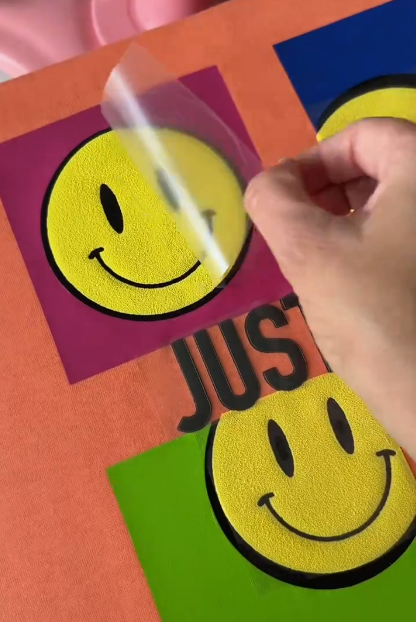
Vinyl transfers involve cutting out designs from vinyl sheets and heat pressing them onto the fabric. Teams and businesses commonly use this method for sports jerseys and personalized items.
How Do Vinyl Transfers Work?
- 1. Cutting: The design is cut from a vinyl sheet.
- 2. Heat Pressing: The vinyl is heat pressed onto the custom t-shirt.
Pros and Cons of Vinyl Transfers
Pros
- • Durable
- • Ideal for small quantities
- • Great for simple designs
Cons
- • Thick and plasticky feel
- • Not suitable for large, complex designs
Conclusion
Choosing the right t-shirt printing method depends on various factors, including the design, quantity, fabric type, and budget. For instance, screen printing is excellent for large orders and vibrant colors. In contrast, water-based and discharge printing offer softer, eco-friendly options.
Additionally, the simulated process provides a great alternative for achieving detailed designs with a wide range of colors. Moreover, considering the specific needs of your project will help in selecting the most suitable method. And once you’ve decided on a printing method, the next step is choosing the perfect tee to print on, making sure your design shines on a shirt people will actually want to wear.
Furthermore, considering the specific needs of your project will help in selecting the most suitable method. A decision that becomes even more important when launching a t-shirt business in 2025.


Let’s Get Started on your First Order

subcategories


Popular Products

Southern Tide Mini Skipjack Hat
Adidas Adjustable Washed Slouch Cap
Swannies - Delta Cap
Imperial - The Original Small Fit Performance Cap
Oakley - Pro-Formance Cap New
Sportsman - Five-Panel Rope Heritage Fit Cap
OTTO - 5 Panel Mid Profile Baseball Cap
AS Colour - STELLA LONGSLEEVE
AS Colour - Mens Raglan Tee
AS Colour - Mens State Tee
AS Colour - Youth L/S Tee
AS Colour - Mens Classic Pocket L/S Tee
AS Colour - Mens Heavy Tee
Los Angeles Apparel - Garment Dye Micro Crop Tee
Helly Hansen Mens Engram Jacket
Helly Hansen Womens Salt Original Jacket
Helly Hansen Womens Imperial Pile Jacket
Helly Hansen Mens Daybreaker Block Microfleece Jacket
Helly Hansen Womens Aspire Puffy Parka
Helly Hansen Womens Vancouver Rain Jacket
Helly Hansen Mens Verglas Icefall Down Jacket
Los Angeles Apparel - 16oz. Plush Fleece PO Hoodie
Los Angeles Apparel - Baby Rib Long Sleeve Hoodie
Los Angeles Apparel - 12oz Fleece Wide Hoodie
Los Angeles Apparel - 12OZ TRIBLEND FLEECE HOODIE
Under Armour Womens Drive Pro Hybrid Hoodie
Under Armour Womens Breezy Hoodie
Southern Tide Womens Linley Brrr-illiant Performance Hoodie
AS Colour - Carrie Tote
Los Angeles Apparel - Bull Denim Shopping Bag
Peter Millar Pursuit Tote
Johnnie-O Dyed Canvas Tote Bag
Johnnie-O Nylon Packable Tote
Los Angeles Apparel - Oversize Bull Denim Bag
Patagonia Terravia Tote Pack
Everybody World - Adjustable Apron
Artisan Collection by Reprime - Annex Oxford Apron with Pocket
Artisan Collection by Reprime - Recycled Bib Apron
Artisan Collection by Reprime - Artisans Choice Canvas Apron
Artisan Collection by Reprime - Barley Stitch Recycled Bib Apron with Pockets
Artisan Collection by Reprime - Regenerate Recycled Bib Apron
Artisan Collection by Reprime - Espresso Bib Apron with Pockets
resources
get a quote!
Fill out this form to help us understand your needs and respond accurately.
4
47 Brand
A
Adams Headwear
A
Adidas
A
Allmade
A
American Apparel
A
ANETIK
A
Artisan Collection by Reprime
A
AS Colour
A
Atlantis Headwear
A
Augusta Sportswear
A
Authentic Pigment
B
Badger
B
BAGedge
B
Bayside
B
Beimar
B
Bella + Canvas
B
Bogg
B
Boxercraft
C
Carhartt
C
Carmel Towel Company
C
Champion
C
Colortone
C
CORE365
C
Columbia
C
Comfort Colors
C
Cotton Heritage
D
DTLA Print
D
Dyenomite
E
Econscious
E
Everybody World
E
Everywhere Apparel
F
Flexfit
F
Fruit of the Loom
G
G Fore
G
Galvin Green
G
Gildan
H
Hanes
H
Helly Hansen
I
Independent Trading Co.
I
Imperial
I
Infinity Her
J
Jaanuu
J
Jerzees
J
Johnnie-O
J
Just Hoods By AWDis
K
Kati
K
Kishigo
K
Knack
L
Lane Seven
L
Legacy
L
Liberty Bags
L
Linksoul
L
Los Angeles Apparel
M
M&O
M
Marine Layer
M
Mega Cap
N
New Era
N
Next Level
N
Nike
N
North Face
O
Oakley
O
OGIO
O
OGIO Endurance
O
Onna
O
OTTO
O
Original Favorites
P
Paragon
P
Patagonia
P
Peter Millar
P
Port & Company
P
Port Authority
Q
Q-Tees