Embroidery Meaning: What It Is, How It Works, and Where It Shines
Last Updated: 08/11/2026
Talk to our team today! (323) 261-8700

Key Takeaways
- Embroidery means decorating fabric by stitching a design with thread — it produces a raised, textured finish
- Machine embroidery uses a digitized artwork file to control stitch placement; a standard logo uses 5,000–10,000 stitches
- Hats, polos, jackets, and bags are the strongest candidates — structured fabrics hold stitches cleanly
- Embroidery is more durable than ink printing through washing — stitched designs do not crack, fade, or peel
- DTLA Print offers embroidery from 1 piece, in-house in downtown Los Angeles, with free artwork proofs
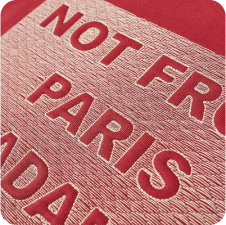
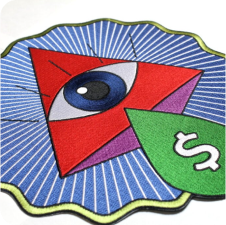
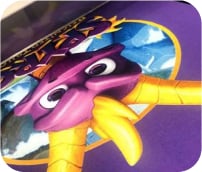
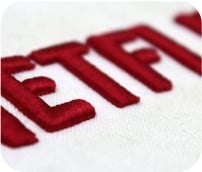
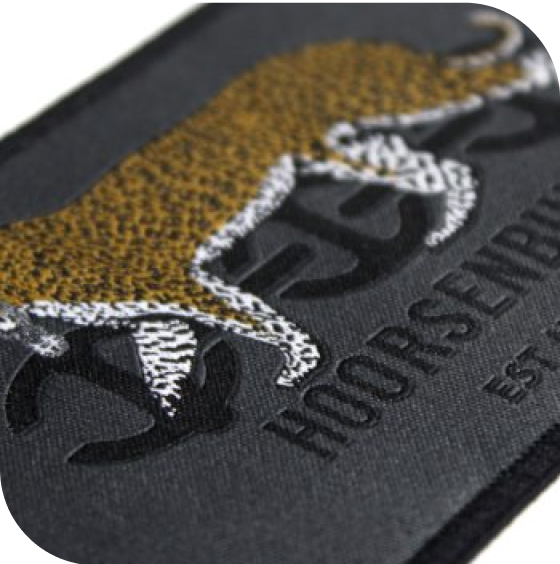
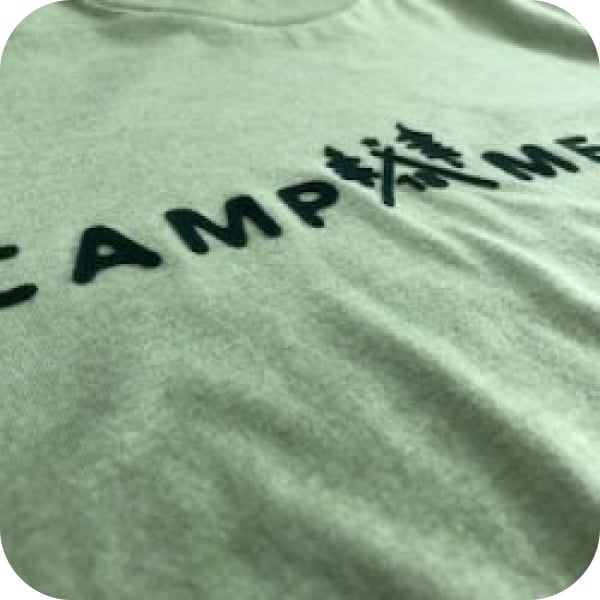
Embroidery means decorating fabric by stitching a design with thread — either by hand or, for custom apparel, by a computerized machine that follows a digitized artwork file. The result is a raised, textured finish that holds its shape and color through washing, which is why embroidery is the go-to choice for custom hats, polos, jackets, and corporate uniforms.
At DTLA Print, embroidery is available from 1 piece and performed in-house at our downtown Los Angeles facility. Every order includes a free digital proof so you can see how the finished stitching will look on the garment before production begins.
What Does Embroidery Mean in Custom Apparel?
In everyday language, embroidery refers to any decorative needlework. In the custom apparel context, it almost always means machine embroidery: a process where a computerized embroidery machine reads a digitized design file (called a DST or EMB file) and uses multiple needle stations — each threaded with a different color — to stitch the artwork directly into the fabric.
Each needle penetration is a single stitch. A standard left-chest logo that measures 3–4 inches wide typically requires between 5,000 and 10,000 stitches. A larger design — such as a full back jacket graphic or a densely filled patch — may exceed 50,000 stitches.
The key distinction from printing methods: embroidery is part of the fabric. Unlike an ink print that sits on top of the fibers, stitched thread is interlocked with the weave, making it far more resistant to fading, cracking, or peeling over time.
How Does Machine Embroidery Work?
The process starts with digitization. A skilled digitizer takes your logo or artwork and maps each area to a stitch type: satin stitches for text and thin lines, fill stitches for large solid areas, and run stitches for fine details and outlines. The resulting file tells the machine exactly where to place each needle strike.
The garment is then hooped — stretched across a rigid frame that holds it taut and flat — and loaded into the embroidery machine. The machine stitches the design in sequence, changing thread colors automatically by advancing to the next needle head. On a multi-head machine running 6–12 heads simultaneously, multiple garments are decorated in parallel.
After stitching, the backing material (a stabilizer) is trimmed from the underside and the garment is quality-checked for any skipped stitches, thread tension issues, or misaligned elements.
What Types of Apparel Work Best for Embroidery?
Embroidery works best on structured, medium-to-heavyweight fabrics that can hold the stitch tension without puckering. The best candidates:
- Hats and caps: The structured crown of a baseball cap or snapback is nearly ideal for embroidery. See DTLA Print’s full range of custom embroidered hats.
- Polo shirts: Pique cotton fabric is a classic embroidery substrate — the weave holds stitches tightly and the professional context of polo shirts pairs naturally with embroidered logos.
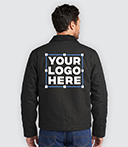
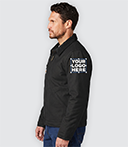
- Jackets and outerwear: Nylon, fleece, and twill jackets take embroidery well, especially on the chest or sleeve.
- Tote bags: Heavy canvas and cotton totes are stable enough for both fill and satin stitches.
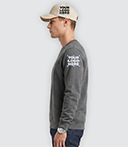
- Crewneck sweatshirts: 8 oz and heavier fleece accepts standard stitch counts cleanly. Lightweight jersey (under 5 oz) typically requires extra stabilizer and is better suited to screen printing or DTF.
Learn more about what DTLA Print’s embroidery service covers and how to submit artwork.
Embroidery vs. Screen Printing vs. DTF: How They Compare
| Method | Finish | Best For | Min. Order | Durability |
|---|---|---|---|---|
| Embroidery | Raised, textured thread | Hats, polos, logos, text | 1 piece | Excellent — does not crack or fade |
| Screen printing | Flat, vibrant ink | T-shirts, bulk graphic tees | 12 pieces | Good — may crack on thin fabric after extended washing |
| DTF printing | Smooth, full-color transfer | Complex art, small runs | 1 piece | Good — adheres well to most fabric types |
For corporate logos, uniform programs, or any design where a professional, upscale look matters, embroidery is the right choice. The three-dimensional texture of a stitched logo conveys quality in a way that flat ink printing cannot.
What Does Embroidery Cost and How Long Does It Take?
Embroidery pricing depends on stitch count, the number of garments, and the number of decoration locations. Designs with higher stitch counts take longer to stitch per piece, so the machine time per unit is greater. A simple 5,000-stitch logo on a cap costs less per piece than a 15,000-stitch chest logo on a jacket.
At DTLA Print:
- Minimum order: 1 piece
- Standard turnaround: 10–14 business days from proof approval
- Rush turnaround: available from 3–5 business days
- Free digital proof: included with every order — no production until you approve
For per-piece name personalization (each garment embroidered with a different name or number), that option is available through a DTLA representative. Contact the team with your list and design to get a quote.

Frequently Asked Questions About Embroidery Meaning
What does embroidery mean?
Embroidery means decorating fabric by stitching a pattern or design with thread. In custom apparel, it almost always refers to machine embroidery — a computerized process that stitches digitized artwork directly into the fabric, producing a raised, textured finish.
How is embroidery different from screen printing?
Embroidery stitches thread into the fabric, creating a three-dimensional, textured design. Screen printing applies ink on top of the fabric surface for a flat, vivid finish. Embroidery is more durable through repeated washing; screen printing handles larger and more color-rich designs more cost-effectively at higher quantities.
What types of garments are best for embroidery?
Hats, polos, jackets, tote bags, and mid-weight sweatshirts are the strongest candidates. These items have enough fabric structure to hold stitches without puckering. Very lightweight or stretchy fabrics are better suited to DTG or DTF printing.
How many stitches does a standard embroidered logo use?
A standard left-chest logo measuring 3–4 inches wide uses approximately 5,000 to 10,000 stitches. Larger or more detailed designs — like a full back jacket graphic — can exceed 50,000 stitches.
Is there a minimum order for custom embroidery at DTLA Print?
No. DTLA Print offers embroidery from 1 piece, with no minimum order. Every order includes a free digital proof before production begins.
Related at DTLA Print
Custom Embroidered HatsEmbroidery ServicesCustom Hoodies & SweatshirtsGet a Free Quote

Let’s Get Started on your First Order

subcategories


Popular Products

Southern Tide Mini Skipjack Hat
Adidas Adjustable Washed Slouch Cap
Swannies - Delta Cap
Imperial - The Original Small Fit Performance Cap
Oakley - Pro-Formance Cap New
Sportsman - Five-Panel Rope Heritage Fit Cap
OTTO - 5 Panel Mid Profile Baseball Cap
AS Colour - STELLA LONGSLEEVE
AS Colour - Mens Raglan Tee
AS Colour - Mens State Tee
AS Colour - Youth L/S Tee
AS Colour - Mens Classic Pocket L/S Tee
AS Colour - Mens Heavy Tee
Los Angeles Apparel - 18/1 S/S Oversized Mock
Helly Hansen Mens Engram Jacket
Helly Hansen Mens Chelsea Evo Winter Jacket
Helly Hansen Mens Bergholm Insulated Winter Jacket
Helly Hansen Womens Salt Original Jacket
Helly Hansen Womens Imperial Pile Jacket
Helly Hansen Mens Daybreaker Block Microfleece Jacket
Helly Hansen Womens Aspire Puffy Parka
Los Angeles Apparel - 16oz. Plush Fleece PO Hoodie
Los Angeles Apparel - 12oz Fleece Wide Hoodie
Los Angeles Apparel - 12OZ TRIBLEND FLEECE HOODIE
Los Angeles Apparel - Baby Rib Long Sleeve Hoodie
Under Armour Womens Drive Pro Hybrid Hoodie
Under Armour Womens Breezy Hoodie
Southern Tide Womens Linley Brrr-illiant Performance Hoodie
AS Colour - Carrie Tote
Los Angeles Apparel - Bull Denim Shopping Bag
Peter Millar Pursuit Tote
Johnnie-O Dyed Canvas Tote Bag
Johnnie-O Nylon Packable Tote
Los Angeles Apparel - Oversize Bull Denim Bag
Patagonia Terravia Tote Pack
Everybody World - Adjustable Apron
Artisan Collection by Reprime - Annex Oxford Apron with Pocket
Artisan Collection by Reprime - Recycled Bib Apron
Artisan Collection by Reprime - Artisans Choice Canvas Apron
Artisan Collection by Reprime - Barley Stitch Recycled Bib Apron with Pockets
Artisan Collection by Reprime - Regenerate Recycled Bib Apron
Artisan Collection by Reprime - Espresso Bib Apron with Pockets
resources
get a quote!
Fill out this form to help us understand your needs and respond accurately.

4
47 Brand
A
Adams Headwear
A
Adidas
A
Allmade
A
American Apparel
A
ANETIK
A
Artisan Collection by Reprime
A
AS Colour
A
Atlantis Headwear
A
Augusta Sportswear
A
Authentic Pigment
B
Badger
B
BAGedge
B
Bayside
B
Beimar
B
Bella + Canvas
B
Bogg
B
Boxercraft
C
Carhartt
C
Carmel Towel Company
C
Champion
C
Colortone
C
CORE365
C
Columbia
C
Comfort Colors
C
Cotton Heritage
D
DTLA Print
D
Dyenomite
E
Econscious
E
Everybody World
E
Everywhere Apparel
F
Flexfit
F
Fruit of the Loom
G
G Fore
G
Galvin Green
G
Gildan
H
Hanes
H
Helly Hansen
I
Independent Trading Co.
I
Imperial
I
Infinity Her
J
Jaanuu
J
Jerzees
J
Johnnie-O
J
Just Hoods By AWDis
K
Kati
K
Kishigo
K
Knack
L
Lane Seven
L
Legacy
L
Liberty Bags
L
Linksoul
L
Los Angeles Apparel
M
M&O
M
Marine Layer
M
Mega Cap
N
New Era
N
Next Level
N
Nike
N
North Face
O
Oakley
O
OGIO
O
OGIO Endurance
O
Onna
O
OTTO
O
Original Favorites
P
Paragon
P
Patagonia
P
Peter Millar
P
Port & Company
P
Port Authority
Q
Q-Tees